
Wonder Blast
Fugo GamesPuzzle
4.6287.00 Reviews
- Version
- 56097599
- Installs
- 1.00M
- Age Rating
- Everyone
Screenshots
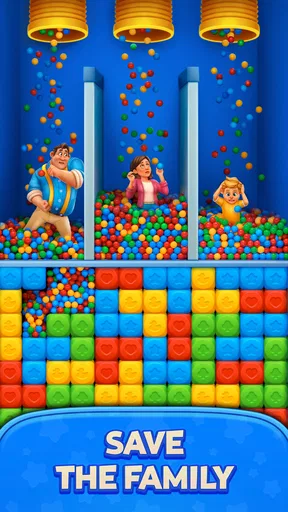
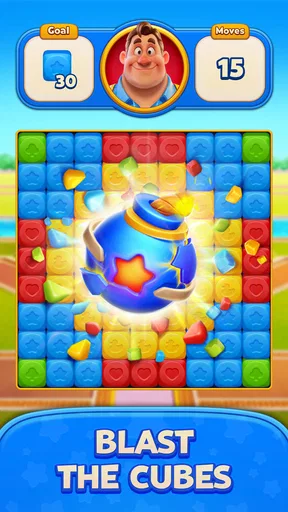
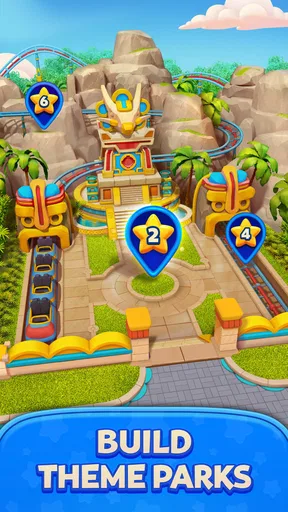


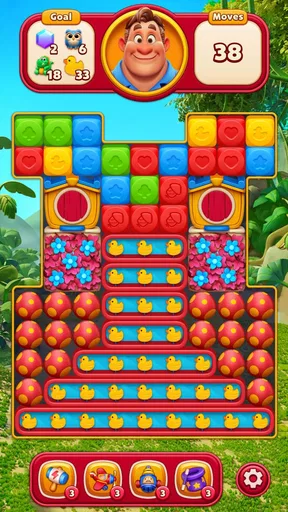
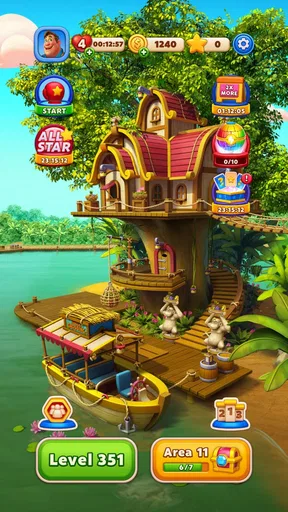

Our Review of Wonder Blast
 Analysis by Appyee
Wonder Blast is the kind of puzzle game I can open without preparing for a serious gaming session. It puts the Wilson Family at the center of a light adventure and asks me to solve compact blast puzzles as I move through their journey. That simple setup gives each level a little more purpose than an isolated board, while the bright presentation keeps the mood relaxed rather than demanding.
Developed by Fugo Games, this free puzzle game is available to players rated Everyone and runs on Android 8.0 or later. It has reached over a million installs and holds a 4.6 average from roughly twenty-one thousand ratings, which matches my impression that it is designed for broad, casual appeal. The game is easy to understand quickly, but it still has enough decision-making to make the better moves feel satisfying.
A cheerful first impression that gets to the point
My first impression was shaped less by complexity than by clarity. Wonder Blast does not make me spend a long time learning a complicated ruleset before I can enjoy it. The central idea is immediately readable: look at the puzzle, identify useful groups, and create blasts that clear the board efficiently. That accessibility is important because this is a game built for short visits as much as longer sessions.
The Wilson Family gives the experience a recognizable thread. Instead of presenting a disconnected sequence of colorful puzzles, the game frames progress as an adventure involving recurring characters. I found that framing useful because it gives me a reason to care about moving forward, even when the individual board is only going to occupy a few minutes.
The free entry point also makes sense for this format. I can try the game without paying first, then decide whether its pacing and presentation deserve more of my time. There are in-app purchases ranging from $0.99 to $99.99 per item, so I would approach optional spending carefully. The game is most appealing when the puzzle itself remains the reason to continue, not the pressure to buy progress.
One practical advantage is how well the structure suits interruptions. I can play while waiting for a coffee, during a commute when I am seated, or between household tasks. A puzzle game like this has to communicate its goal quickly, and Wonder Blast generally succeeds at making each return feel approachable rather than like I have forgotten a complicated plan.
That does not mean the opening is perfect for everyone. Players looking for a deep strategy game, a large narrative adventure, or a highly competitive challenge may find the initial simplicity too gentle. Its appeal comes from polished casual play, not from demanding concentration from the first minute.
Reading the visual language of the journey
The art direction works because it supports the game’s emotional temperature. The family-centered setting, colorful puzzle pieces, and playful presentation all point in the same direction: this is meant to feel friendly, energetic, and safe for a wide audience. Nothing about the visual identity suggests that I should treat a failed attempt as a major setback, which helps keep the mood inviting.
I especially appreciate how the setting gives the board-based action a sense of movement. The puzzle is still the main event, but the surrounding adventure makes progress feel like part of a larger trip. That connection is modest rather than story-heavy, yet it prevents the game from feeling like a bare collection of interchangeable screens.
The visual language also helps with decision-making. In a blast puzzle, the player needs to distinguish pieces, possible groups, and the results of a move without hesitation. Clear shapes and strong color separation are not merely decorative choices; they determine whether I can plan ahead or whether I am just tapping the most obvious cluster. Wonder Blast benefits when its cheerful look remains functional.
A useful habit is to pause briefly before making the first move of a level. The brightest or largest group is not automatically the best choice. I look for arrangements that can produce a larger blast, reach an awkward corner, or open space near an objective. The friendly artwork can encourage quick tapping, but the better experience comes from letting the board speak before acting.
The family theme is also a sensible choice for the Everyone rating. It makes the game easier to recommend in a shared household, especially when someone wants a colorful puzzle without aggressive imagery or an intense competitive atmosphere. I would still keep purchases in mind if a child is playing on a device, because the free download includes paid items.
Sound, rhythm, and the feel of each move
Wonder Blast’s mood depends on more than its colors. The sound design and animation rhythm need to make clearing pieces feel rewarding without turning every move into noise. In my experience, the presentation is at its best when visual feedback, blast effects, and the completion of a puzzle all arrive as one clean response. That timing gives ordinary matches a small sense of celebration.
The rhythm is deliberately easygoing. I do not feel pushed into frantic actions, and that suits the puzzle format. I can scan the board, choose a move, watch the result, and then reassess. This makes the game comfortable for casual play, but it also means people who want rapid-fire action may find the tempo restrained.
That slower rhythm has a hidden benefit: it makes planning more valuable. Instead of treating every turn as a reflex, I can use the pause between actions to consider what the resulting blast will expose. A move that looks slightly smaller may create a better follow-up than an immediate large clear. The game’s presentation gives me enough breathing room to notice that distinction.
For everyday use, I would play with the device volume at a moderate level rather than expecting the sound to carry the whole experience. The visual feedback is important enough that the game remains understandable even when I am in a quiet place or do not want audio. Conversely, when I can hear the effects, successful chains feel more substantial and the journey has a stronger sense of momentum.
The main trade-off is that this kind of cheerful feedback can become repetitive during extended sessions. I prefer Wonder Blast in short or medium bursts, where the sounds reinforce the action instead of fading into the background. If I were choosing a game specifically for a long, silent strategy session, I would probably prefer something with a more austere presentation and less emphasis on playful reward.
Why the mechanics fit the atmosphere
The puzzle mechanics and the surrounding mood are well matched because neither tries to overpower the other. The board gives me a clear problem to solve, while the Wilson Family adventure provides a gentle reason to continue. The result is a loop that feels more like progress through a cheerful activity than a test designed to punish mistakes.
My most reliable approach is to think in terms of board shape rather than only immediate score. I try to preserve useful groups near the center when possible, because a central blast can affect more of the remaining layout. I also watch the edges: a move that clears the middle may leave isolated pieces in corners, creating a frustrating cleanup later. This is one of the game’s small but meaningful strategic trade-offs.
Another useful technique is to delay a move when the board offers several similar choices. Tapping immediately can remove the group I need to combine with a later opportunity. I look for moves that create a new cluster after the first clear, then choose the one that leaves the most flexible board. That habit makes the game feel less random and gives the colorful presentation a more thoughtful layer underneath.
When a level becomes awkward, I do not assume that the largest visible blast is the answer. Large clears can be impressive but poorly placed. A smaller action beside a blocked or isolated area may be more valuable because it changes the board’s structure. This is where Wonder Blast moves beyond simple matching: the satisfying decision is often about what the next board will look like, not just what disappears now.
The pacing supports this style of play. I can experiment without feeling that the game is demanding expert-level precision, yet careless moves can still make a board harder to finish. That balance is a strong fit for people who want light strategy during spare moments. It is less suitable for players who dislike any element of planning or who want every move to produce a dramatic chain.
There is also a social use case, even without turning the game into a competition. I can hand the device to a friend or family member and explain the basic goal almost immediately. The bright art and Everyone rating make it approachable, while the question of which group to clear first gives two people something to discuss. It works especially well as a shared, low-pressure puzzle rather than as a game demanding uninterrupted personal focus.
Where it stands beside familiar puzzle alternatives
Compared with a traditional match-three game, Wonder Blast feels more focused on creating bursts from grouped pieces than on arranging individual swaps. That changes the way I read the board. I am looking for clusters and chain potential, not only for a single matching exchange. Players who enjoy planning around larger clears may prefer this style, while those who love carefully setting up long swap combinations may find it less precise.
Compared with minimalist puzzle games, it is much more expressive. The family adventure, colorful setting, and celebratory feedback give it a warmer personality than a bare grid with no surrounding context. The cost of that personality is visual and audio activity that may not appeal to someone who wants a quiet, almost abstract brain exercise.
It also differs from heavily competitive puzzle titles. The emphasis here is on personal progression through a playful adventure rather than on proving skill against other players. That makes it a better choice for relaxing after work or sharing with younger players, but not the obvious choice for someone whose main motivation is rankings, tournaments, or direct rivalry.
Compared with large role-playing games, Wonder Blast is far easier to fit into a routine. I do not need to remember a complicated inventory, a large map, or a long quest chain before playing. The compromise is that the adventure framing remains lighter than a full narrative game. The Wilson Family adds continuity, but the puzzle board remains the reason to stay.
Who will enjoy it, and who should skip it
I would recommend Wonder Blast to someone who wants a free, approachable puzzle game with a cheerful setting and enough planning to prevent it from becoming pure tapping. It is a good match for short sessions, family-friendly play, and players who enjoy seeing immediate visual results from their decisions.
It is also a sensible option for people who like their puzzle games to have a little personality. The art direction and family adventure create a coherent mood, so the experience feels more inviting than an anonymous sequence of boards. If you tend to stop playing once a puzzle game feels visually repetitive or emotionally empty, this extra context may help maintain interest.
I would skip it if you are searching for a demanding logic title where every puzzle has one exact solution and the difficulty is the main attraction. I would also look elsewhere if you dislike free-to-play games with optional purchases, even when you can begin without paying. The listed purchase range means careful device settings are worthwhile, particularly when children use the same phone or tablet.
Players on older Android devices should note the minimum requirement of Android 8.0. On supported hardware, the game’s simple visual readability should make it a comfortable fit for casual play, but I still prefer keeping enough storage and battery available for any game session. The current version is 56097599, so checking that the installed build is current is a practical step before judging performance.
Small habits that improve the experience
I get more from the game when I treat each board as a short planning exercise rather than a race. Before tapping, I scan for groups that can influence several areas at once. I then consider whether the move will leave isolated pieces, especially along the edges. This takes only a moment, but it reduces the feeling that success depends entirely on luck.
I also avoid spending simply to escape a frustrating board until I have tried changing my approach. Taking a break and returning with a fresh view is often better for a casual puzzle game than turning a difficult moment into an automatic purchase. Since the game is free to start but includes optional items, I see patience as part of the intended value equation.
For a shared device, I would create a simple household rule: the person playing can ask for help with a board, but purchases require permission. That preserves the easygoing family atmosphere while preventing the free download from becoming an unexpected expense. It is a small practical detail, but it matters more here than another description of the colors or blasts.
Finally, I would use the game’s relaxed rhythm to play at natural stopping points rather than forcing a long session. The presentation is most effective when each successful clear feels like a small lift in mood. After too many consecutive boards, the same feedback can lose some impact. Short sessions keep the adventure fresh and make the game easier to fit into daily life.
A coherent mood with mechanics that stay in control
Wonder Blast succeeds because its art, setting, sound, and pacing all support the same promise: a friendly puzzle adventure that is easy to enter and pleasant to revisit. The Wilson Family gives the journey a recognizable center, while the blast-based boards provide enough decisions to make progress feel earned. I never mistake it for a deep strategy game, but I do find more thought in its layouts than the bright presentation initially suggests.
My final view is positive, with sensible limits. This is a strong choice for casual puzzle fans who value atmosphere, readable mechanics, and short sessions. It is less convincing for players who want intense difficulty, silent minimalism, or a fully developed adventure outside the puzzle boards. The free starting point makes trying it straightforward, and the Everyone rating broadens its audience, but optional purchases deserve attention.
If I were recommending it to a friend, I would describe it as a colorful, family-friendly way to fill spare minutes without demanding a large commitment. I would suggest looking beyond the obvious group, watching the edges of the board, and letting the calm rhythm work in its favor. For me, that combination of approachable blasts and coherent mood is what makes Wonder Blast worth keeping installed.
Verdict
Strengths of Wonder Blast
- Bright, colorful visuals make each level easy to follow.
- Quick levels work well for short gaming sessions.
- Simple controls are suitable for casual players of all ages.
- Frequent rewards help maintain a steady sense of progress.
- Offline play is useful when you have no internet connection.
Limitations of Wonder Blast
- Difficulty can rise sharply after the early levels.
- Some boosters may feel necessary on harder puzzles.
- Ads can interrupt the experience between levels.
- Limited move counts may encourage repeated attempts.
- Progress may feel repetitive after extended play.
Other Releases by Fugo Games
View All


Similar Picks in This Category
View All
Block Blast!
HungryStudio4.8

Braindom: Brain Games Test
Lahana Game Studio4.6

AMAZE!
CrazyLabs LTD4.6

Sudoku - Classic Sudoku Puzzle
Oakever Games4.7

Art Puzzle - Puzzle Games
Easybrain4.8

Amaze GO!
Oakever Games4.9
Frequently Asked Questions
What is Wonder Blast, and how does the gameplay work?
Wonder Blast is a colorful match-three puzzle game built around clearing groups of matching blocks and completing level-specific objectives. During my time with the game, the basic controls were easy to understand: tap or combine blocks to create powerful boosters, then use them to remove larger sections of the board. As levels progress, new obstacles, layouts, and challenges make the puzzles more strategic.
Is Wonder Blast free to download and play?
Wonder Blast can generally be downloaded and played for free, allowing players to progress without paying at the beginning. However, the game may include optional in-app purchases for extra lives, boosters, coins, or other helpful items. These purchases are not always necessary, but difficult stages can encourage them. Parents should review device purchase settings before allowing children to play.
Does Wonder Blast require an internet connection?
An internet connection may be needed for certain Wonder Blast features, including advertisements, cloud-related services, special events, updates, and in-app purchases. Some basic levels may remain accessible when the device is offline, but availability can depend on the version installed and the platform being used. For the most reliable experience, keep the game updated and connected to the internet.
Are there advertisements or in-app purchases in Wonder Blast?
Wonder Blast may display advertisements, particularly when players choose to receive optional rewards such as extra moves, lives, or boosters. It can also offer in-app purchases for coins, power-ups, and progress-related items. The game is still playable without spending money, although waiting for lives or replaying challenging levels may be part of the free experience.
Is Wonder Blast suitable for children and casual players?
Wonder Blast is suitable for casual players who enjoy short, colorful puzzle sessions and simple tap-based controls. The early levels are approachable, but later stages can require planning and patience rather than quick reactions. Because the game may contain advertising and optional purchases, parents should check the age rating, privacy information, and purchase restrictions before installing it on a child’s device.
Play our best games!


